Clay, letter tiles and movement can make practice inviting. Their value depends on the task you set and the help you provide. Begin with one skill the child is learning instead of assuming a colourful activity automatically teaches reading.
Choose a goal you can describe
“Connect this taught spelling with its sound” is different from “Read a whole word”. Decide which one you are practising. Ask the teacher for appropriate examples and a clear sound model.
Do not label the child a visual, auditory or kinesthetic learner. Preferences can change by task and situation; they are not a reason to restrict the activities a child can try.
Activity 1: make and say a known spelling
Use a letter your child has been introduced to. Model its shape using clay or a large printed card, then say the associated sound as the teacher models it. Let your child trace or build it with support.
What to notice: can they connect the printed form and sound, or do they need another demonstration? Making the shape alone is a different observation. Keep the material easy to handle so the craft does not obscure the learning task.
Activity 2: move tiles to build a word
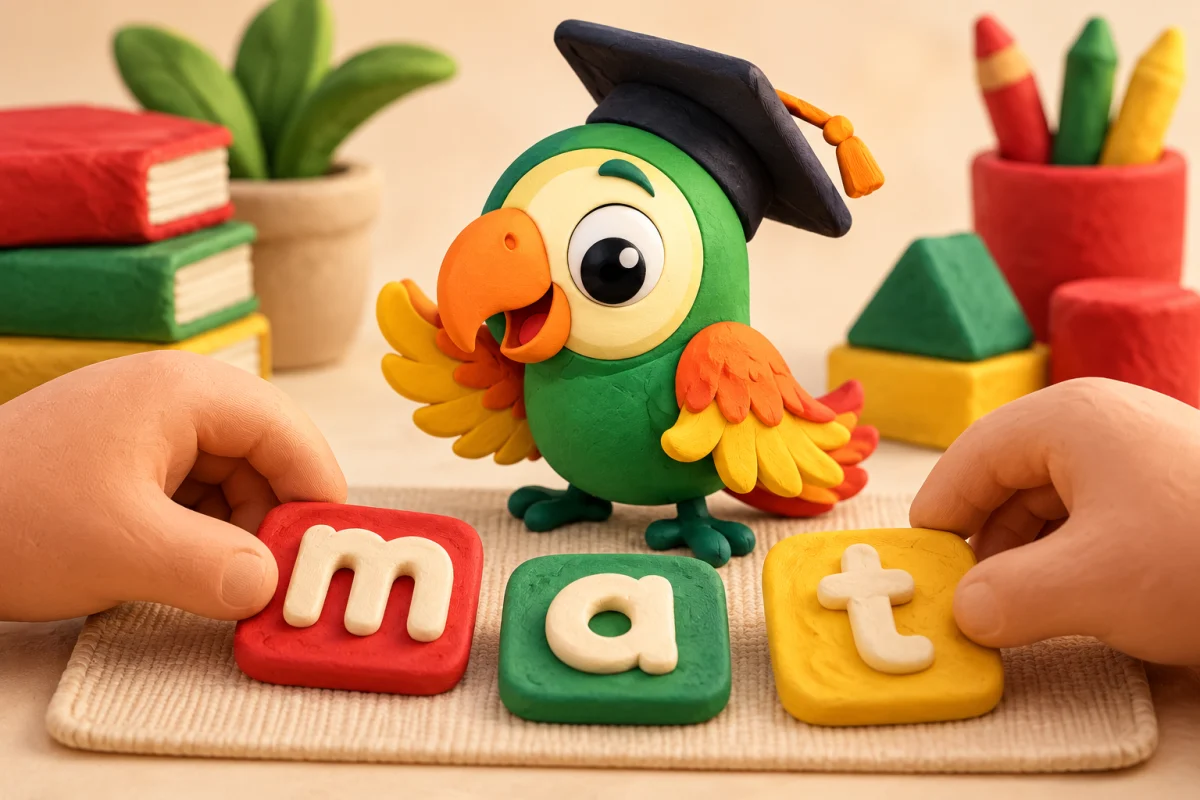
For a familiar word such as sun, arrange its letter tiles, model the sounds and join them. Invite the child to move the tiles into order and read with you.
If they can arrange the tiles by copying but cannot read the word, model the joining step. Do not interpret copying as independent decoding. Use only words whose spellings have been taught.
Activity 3: mark the sounds
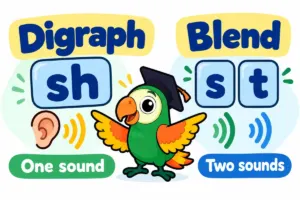
Write a taught word and place one counter for each phoneme. In ship, there are three sounds represented by sh – i – p. Keep the digraph together when pointing to the print.
Moving counters or tapping can represent the sequence. Avoid inserting extra vowel sounds between consonants. Ask the teacher to demonstrate if you are unsure how the word should be modelled.
Keep the next step small
After the activity, read the same word in a short matched passage if appropriate. A child may manage it with tiles and still need support in a book. Record the task and help given rather than describing the whole activity as successful or unsuccessful.
If the materials distract or frustrate the child, use a simpler card or adult demonstration. You do not need to buy specialised equipment for every task.
Why we avoid fixed learning-style labels
EEF finds insufficient evidence for teaching matched to supposed fixed learning styles. Its guidance cautions against categorising pupils this way. Variety and responsive support are different from claiming each child has one learning type.
Read the EEF learning-styles evidence summary.
Related reading
- Digraphs and Consonant Blends: A Clear Guide for Parents
- My Child Knows Letter Sounds but Cannot Blend: What Can I Try?
Discuss your child’s next step
If you would like help choosing suitable reading practice, book a complimentary assessment or explore our reading programme.