Reading words accurately and understanding a passage are related but different tasks. If your child finishes a page but cannot explain it, look at the text, vocabulary and help provided before deciding what the difficulty means.
Compare listening and reading
Read a short passage aloud yourself, then invite your child to explain what happened. On a separate occasion, use a passage matched to their reading knowledge and let them read with support as needed.
If the explanation changes when the adult supplies the words, that is a useful observation for the teacher. It does not diagnose the cause. The child may also be tired, unfamiliar with the vocabulary or unsure what your question means.
A worked example
Adult read-aloud passage: “Sam took a ball to the park. The ball rolled under a bench. Sam looked under the bench and found it.” This is a made-up teaching example, not a decodable passage matched to every child.
Explain rolled and bench with a picture or toy if needed. Ask one question at a time:
- “What did Sam take?”
- “Where did the ball go?”
- “Tell me what happened first, then next.”
- “Why did Sam look under the bench?”
If the child is unsure, return to the relevant sentence and model an answer. Do not repeat a long list of questions after every attempt.
Move from a question to conversation
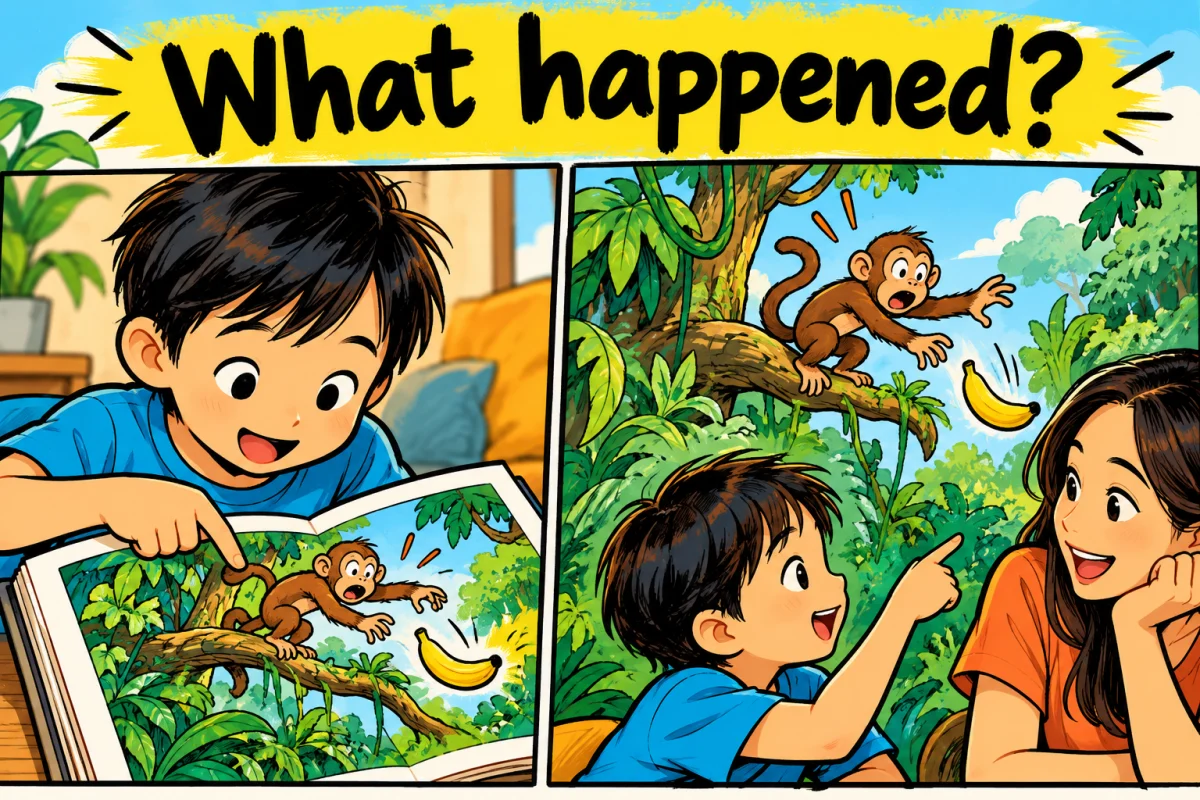
Try “Show me with these toys” or “What part would you draw?” A child may explain an event more comfortably through a picture or action. Describe that response accurately: explaining a heard story is not the same as independently reading the text.
Invite an opinion after discussing the events. “Would you take a ball to the park?” makes room for conversation without replacing what the passage actually says.
Check word meaning
A child can pronounce a word without knowing its meaning. Choose one unfamiliar word, explain it briefly and use it in another everyday sentence. Avoid interrupting so often that the story becomes difficult to follow.
Bring a precise example to the teacher
Note the passage, whether the adult or child read it, any words explained and what the child said. Ask whether the teacher notices the same pattern, and which vocabulary or reading task would be useful next.
For P1 and P2 parents in Singapore, coordinate home practice with the current classroom focus rather than adding harder comprehension worksheets automatically. If printed-word reading still requires substantial effort, discuss matched text and decoding support too.
Related reading
Discuss your child’s next step
If you would like help choosing suitable reading practice, book a complimentary assessment or explore our reading programme.