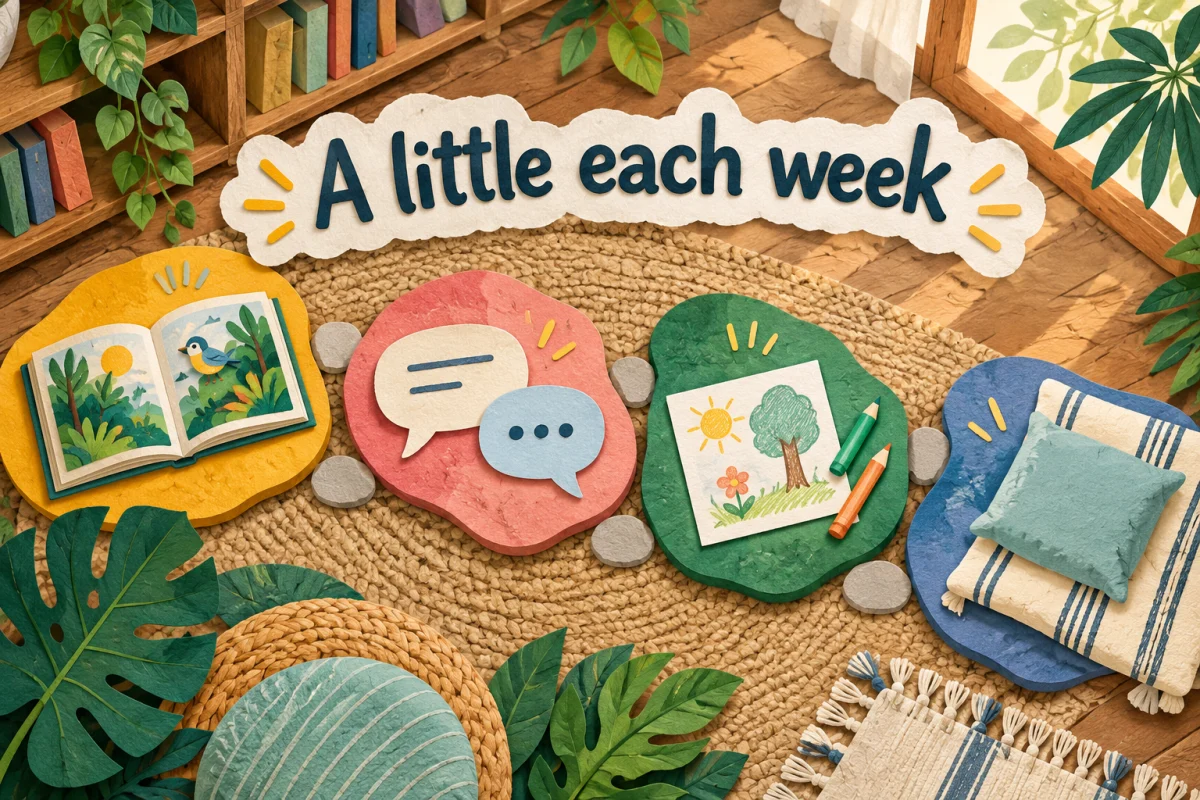
The 2026 mid-year school vacation runs from 30 May to 28 June. A holiday routine can keep books available without filling every day with worksheets. Use this flexible four-week plan as a menu, not a daily completion chart.
Before the break: choose one focus
Ask the teacher for one suitable reading task and matched material. It might be joining sounds in familiar words, reading a short passage or explaining an event. Do not introduce all three as new goals at once.
Choose a separate story your child enjoys hearing. Listening to an adult read a richer book and practising a matched passage have different purposes.
Week 1: make the routine easy to start
Place a few books within reach. Offer a short shared reading moment after a meal or before bed if that suits your family. Let the child pick a read-aloud book. On another occasion, model the teacher’s suggested task and invite a small attempt.
Example: read a favourite story aloud, then practise one already taught word. If the child is tired, just share the story.
Week 2: repeat the useful task
Return to the same matched material with the help needed. Notice whether your child attempts a word after a model, joins in with you or reads it independently. These are different observations.
Use familiar household objects for meaning. After reading cup, for example, talk about an actual cup. Do not make recognising the object a substitute for reading its label.
Week 3: take reading beyond the table
Visit a library, pack a small book for an outing or tell a story with toys. A menu or sign can prompt conversation, but its words may contain untaught spellings. Read those aloud yourself rather than testing the child on them.
If travelling, take only a small matched kit. Holiday experiences and rest do not need to earn points on a reading chart.
Week 4: notice and share
Write one useful observation for the teacher: “Read this familiar passage after one model” or “Explained the story when I read it aloud”. Note what you helped with. Ask what to continue when term resumes.
A simple planning card
- One matched task suggested by the teacher.
- One enjoyable story to hear.
- One conversation or outing.
- Permission to skip a busy or tired day.
This plan does not promise a reading level gained in four weeks. If practice regularly causes frustration, discuss a more suitable task rather than increasing the workload.
Calendar source: North Spring Primary School’s 2026 MOE calendar. Your preschool, international school or family’s holiday arrangements may differ.
Related reading
- March School-Holiday Phonics Games Using Things at Home
- Reading During Family Travel: A Small Kit for the June Break
Discuss your child’s next step
If you would like help choosing suitable reading practice, book a complimentary assessment or explore our reading programme.