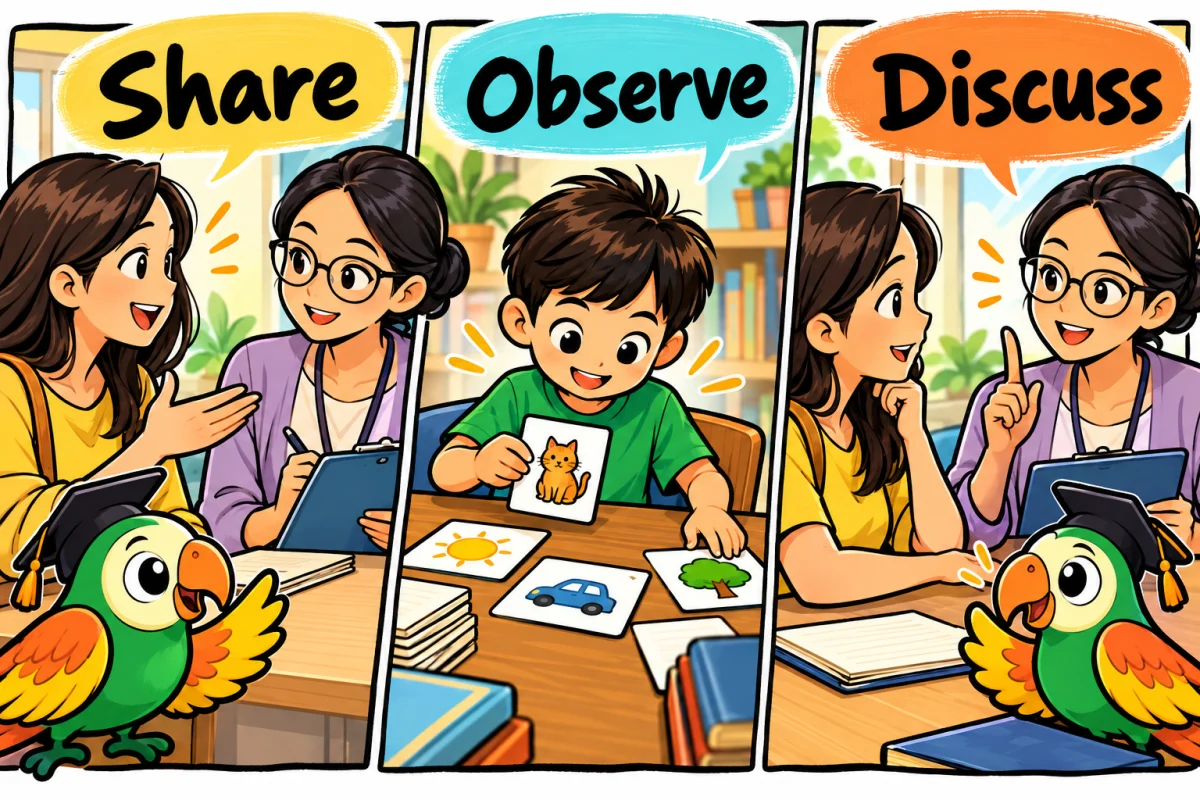
A reading assessment should help you understand what your child manages independently and where they need support. It is a conversation about their current skills, not a test to prepare for or a label to carry into school.
Bring one observation, not a stack of worksheets
Choose something you have noticed at home: “She can say the sounds in mat but needs help joining them,” or “He reads the words but cannot tell me what happened.” These examples describe different tasks. A teacher can explore them rather than assuming both children need the same practice.
Tell the teacher which languages your family uses, what your child’s school is teaching and whether the difficulty happens with unfamiliar books, familiar books or both. Share relevant information about support already in place.
What happens at Paced Learning Academy?
Our assessment is complimentary, with no obligation to enrol. Allow about 30 minutes overall; the assessment usually takes 20–30 minutes and can be shorter for younger children. The teacher explores your child’s reading level and discusses a suitable programme starting level.
You receive feedback during the session and a summary through WhatsApp afterwards. In-person assessments at Kovan and Ara Damansara are for ages 3–8; live online assessments are for ages 4–8. Confirm arrangements when booking.
Four questions worth asking
- What did my child do without a prompt?
- Which task needed a demonstration?
- What should we practise next, and with which words or books?
- What change should we look for when reviewing progress?
“Needed help joining the sounds in sun” is more useful than “weak in English”. Ask for an example you can understand and a manageable home activity. The assessment supports educational placement; it does not diagnose a speech, language or learning condition.
Does a trial promise a particular result?
No. Four paid trial sessions let your family experience the lessons. They are charged at the normal session rate, paid upfront and include materials. The registration fee is payable only if you continue afterwards. Discuss what the teacher observes across those lessons rather than expecting every child to reach the same milestone in four sessions.
Preparing for an online assessment
Have a device with a camera and stable internet ready. Find a comfortable place where your child can hear the teacher. Follow the joining instructions and allow your child to answer; tell the teacher if you need help with the setup.
Related reading
- My Child Knows Letter Sounds but Cannot Blend: What Can I Try?
- Does My Child Need to Read Before Primary 1 in Singapore?
Discuss your child’s next step
If you would like help choosing suitable reading practice, book a complimentary assessment or explore our reading programme.