Storytelling and Phonics: Making Letter Sounds Come to Life

For many children, learning phonics can feel like memorizing a list of abstract rules and sounds. But what if phonics could be an adventure — full of stories, characters, and exciting sounds? By blending storytelling with phonics instruction, parents and educators can create a more meaningful, memorable, and fun learning experience for young readers.

In this blog post, we’ll explore how storytelling enhances phonics learning, why it works, and how you can incorporate it into your child’s daily reading routine — whether at home, in class, or through a structured phonics online course or in-person phonics program.

📘 Why Storytelling Works with Phonics

Storytelling is one of the oldest and most powerful tools for teaching. Stories naturally capture a child’s attention, spark their imagination, and create emotional connections. When phonics concepts are embedded within a story, the learning becomes more engaging and less mechanical.

Instead of isolating the /b/ sound and drilling flashcards, imagine telling your child a fun story about “Bobby the Bouncing Bear,” who bounced on his big blue bed and bellowed “Buh-buh-buh!” at bedtime. Now, every time your child sees the letter B, they’ll remember Bobby’s bouncing adventure.

Why this works:

🧠 Memory retention: Story-based learning helps children remember because stories follow logical sequences and often include repetition.

🎯 Contextual learning: Children understand how sounds work in real language situations, not just on worksheets.

😊 Enjoyment: When children are emotionally engaged, learning becomes fun and exciting — not a chore.


🧠 How Storytelling Supports Phonemic Awareness and Decoding

Phonemic awareness — the ability to hear, identify, and manipulate the individual sounds in words — is a critical skill for early readers. Storytelling provides a natural and enjoyable way to develop this skill.

Here’s how it helps:

📚 Predictable Patterns

Many early stories use rhyming and repetition, which train the ear to detect patterns and anticipate what comes next. Books like “The Cat Sat on the Mat” introduce rhyming families that support phonemic recognition.

🧩 Sound Blending and Segmenting

Through stories, children hear how sounds are blended to make words. For example, in a story about “Sam the Singing Snake,” they hear /s/ + /a/ + /m/ become “Sam.” Later, they can break it apart again — a vital decoding skill.

🗣️ Oral Practice

As kids retell stories, they naturally segment words into sounds and syllables. This oral storytelling strengthens their awareness of how spoken language connects with written words.


Practical Examples of Storytelling + Phonics in Action

Parents and educators can integrate storytelling and phonics with a few creative approaches:

1. Sound-of-the-Day Stories

Choose a sound (like /t/) and tell a short story featuring that sound often:

“Tommy the tall turtle tiptoed through the tulip field on Tuesday.”

Afterward:

  • Ask your child to find and say all the /t/ words in the story.
  • Have them draw one of the characters or items.
  • Practice writing the letter T while repeating the sound.

2. Character-Based Sound Learning

Give each letter sound its own character:

  • /m/ = Molly Mouse who munches on muffins.
  • /k/ = Carl the Crab who clicks his claws.

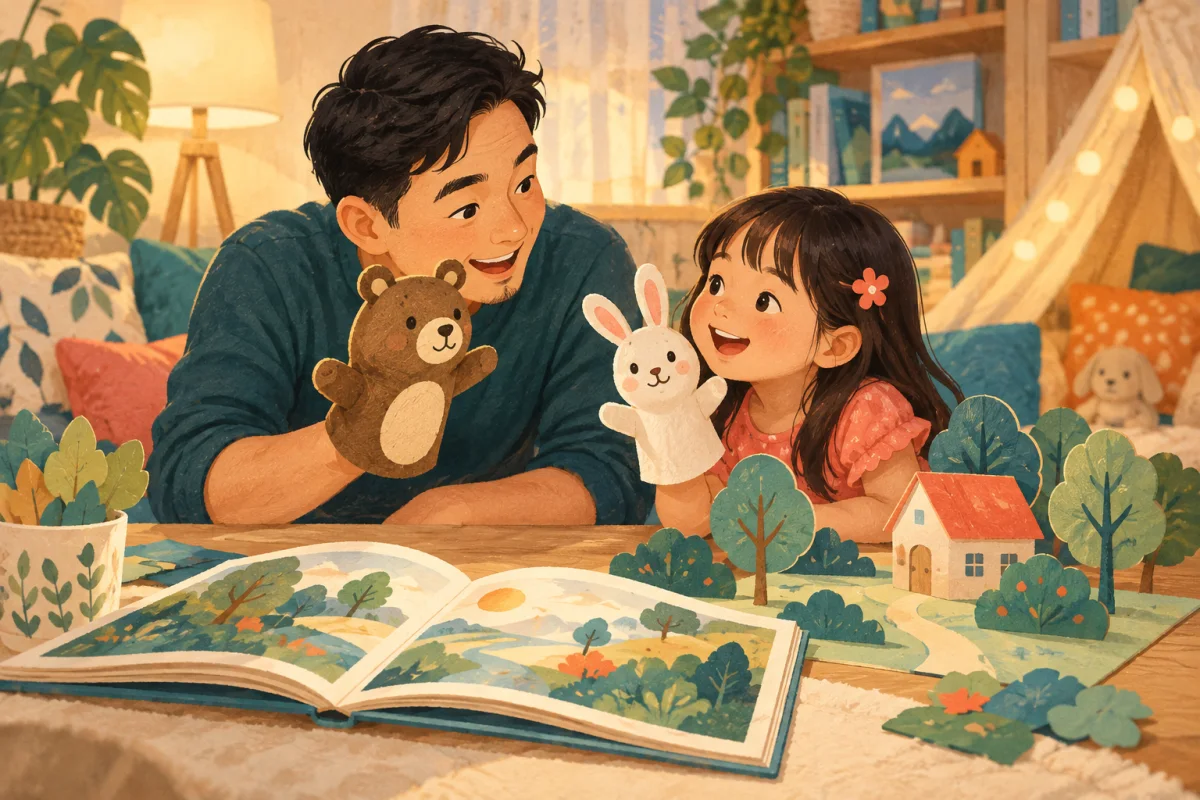
Create fun stories or rhymes with these characters to reinforce the sound. You can even make simple puppets or draw them together!

3. Storytelling with Decodable Books

Use phonics-based readers that align with your child’s learning stage. For example:

  • A book that only uses CVC words like “cat,” “mat,” “hat.”
  • Stories focusing on a single blend, like “sn” (snap, snip, snail).

Make it interactive:

  • Highlight target words as you read.
  • Clap out the sounds in key words.
  • Let your child act out the story with toys or gestures.


🏡 Easy Ways to Use Storytelling and Phonics at Home

You don’t need to be a teacher to bring storytelling and phonics into your home. Here are simple, fun ways to get started:

📘 Story Time Twist

During bedtime reading, pause to ask, “Did you hear the /d/ sound in ‘dog’?” or “What letter do you think that sound starts with?”

🎨 Invent-a-Story Together

Pick a sound of the day (like /ch/) and create a silly story:

“Charlie the Chicken chased cheese chunks in a chilly cave!”

Encourage your child to add characters or plot twists using words with the same sound.

🔍 Sound Hunts

After your story, go on a sound scavenger hunt:

“Let’s find things that start with /b/ — ball, book, banana!”

This reinforces phonics while keeping it playful and active.


🧑‍🏫 What to Look for in a Phonics Program with Storytelling

If you’re searching for a phonics program, whether online or in-person, look for one that:

✅ Uses characters and stories to teach new sounds.

✅ Includes interactive storytelling, songs, or role play.

✅ Offers decodable books with structured phonics patterns.

✅ Encourages kids to create and tell their own sound-based stories.

At our center, storytelling is at the heart of our phonics approach. Children don’t just memorize — they experience language through narrative, emotion, and imagination. Whether you’re exploring our online phonics programs or in-person classes, your child will benefit from the magic of story-based learning.


🌟 Final Thoughts: Making Phonics Magical

Storytelling transforms phonics from a mechanical task into an exciting journey. It taps into a child’s natural love for stories, helping them learn to decode, blend, and read with confidence. When stories come alive with meaningful sounds, reading becomes not just a skill — but a joy.

📘 Ready to see your child fall in love with reading?

Explore our engaging phonics programs — available online, in Kovan, and Canberra — and discover how storytelling can bring phonics to life for your child.